Wears & Tears
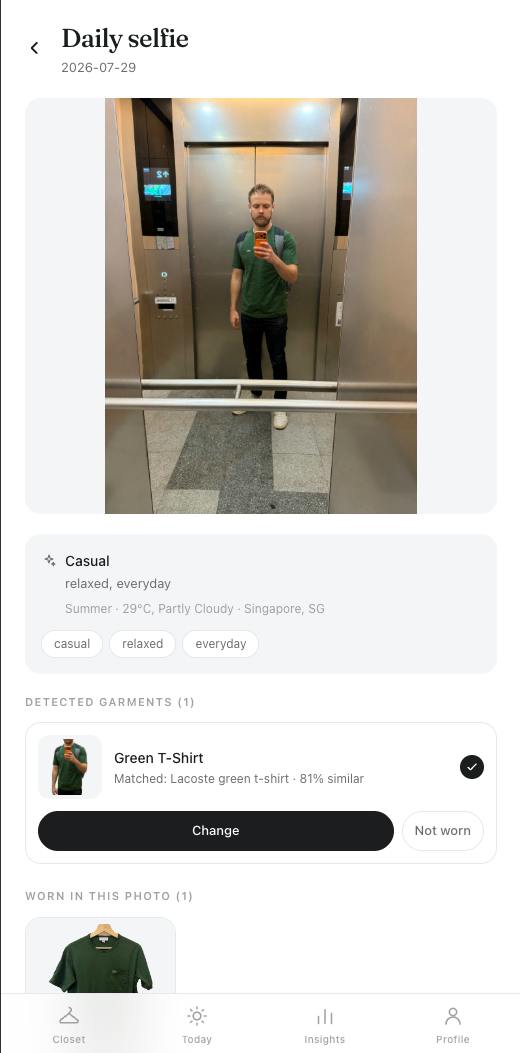
Your closet, catalogued by AI. One daily selfie tracks what you wear and what it costs per wear, helping you decide what to keep, retire or replace.

Why
My favorite Teva sandals fell apart in the middle of a hike in Okinawa. My wife had told me to replace them before the trip. Several times. She was right.
I want exactly as much clothing as I need, and I wear it until the fabric surrenders. The sandals exposed the flaw in that strategy: I wasn’t keeping track of how much use things had had, or acting on the signs that they were worn out. So, in 2026, I built a wardrobe tracker with the enthusiasm of an engineer who had just experienced an avoidable equipment failure.
The idea was to make everyday use visible. What do I actually wear? Which purchases sit untouched? What needs replacing before the next trip? AI image matching offered a way to keep that record with a quick selfie instead of a daily inventory form. I also set myself a constraint: use open-weight models and see whether the running cost could stay low enough for a side project.
How
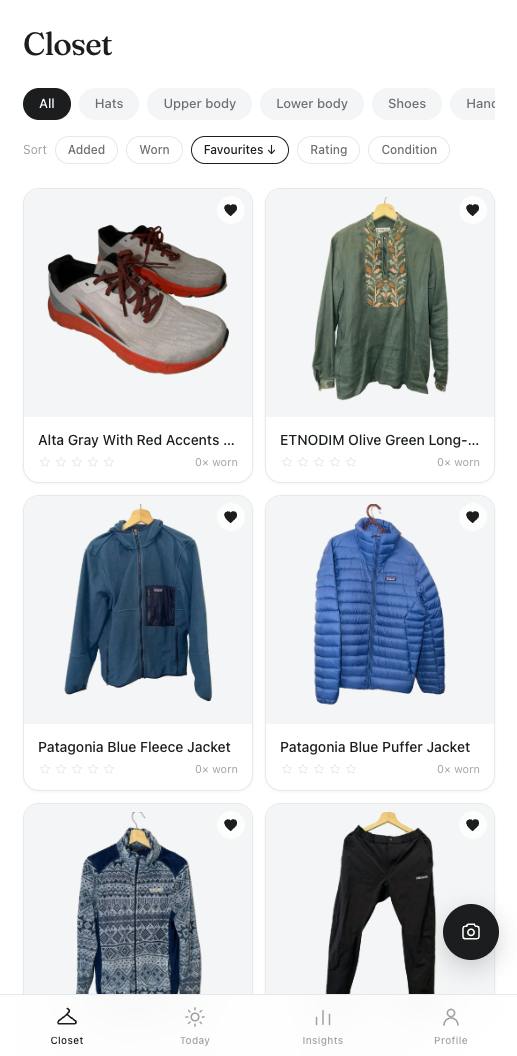
- Catalogue your clothes from photos to build a digital wardrobe.
- Take a daily selfie: AI matches what you’re wearing to the items in your closet.
- Follow the wear history: see usage, cost per wear and depreciation, including items that rarely leave the shelf.
- Plan replacements: use wear limits and suggestions to decide what needs attention.
My own wardrobe became the test case: 132 items, from shoes and ski gear to yellow Harley-Davidson gloves. My favorite jeans have a limit of four years or 200 wears. That gives me a concrete reminder to review them before another item fails halfway through a trip.
The To Replace list also solves a smaller domestic problem: gifts. Tag what you need, or review AI suggestions, then share the list with your spouse so the next present can be something useful.
I introduced Wears & Tears in July 2026 and launched it on Product Hunt on August 1. Its AI pipeline uses open-weight models through OpenRouter and Cloudflare. Matching quality still has room to improve, but the experiment is already keeping a record I didn’t have before: how much of my wardrobe earns its place, and how long I ask it to last.